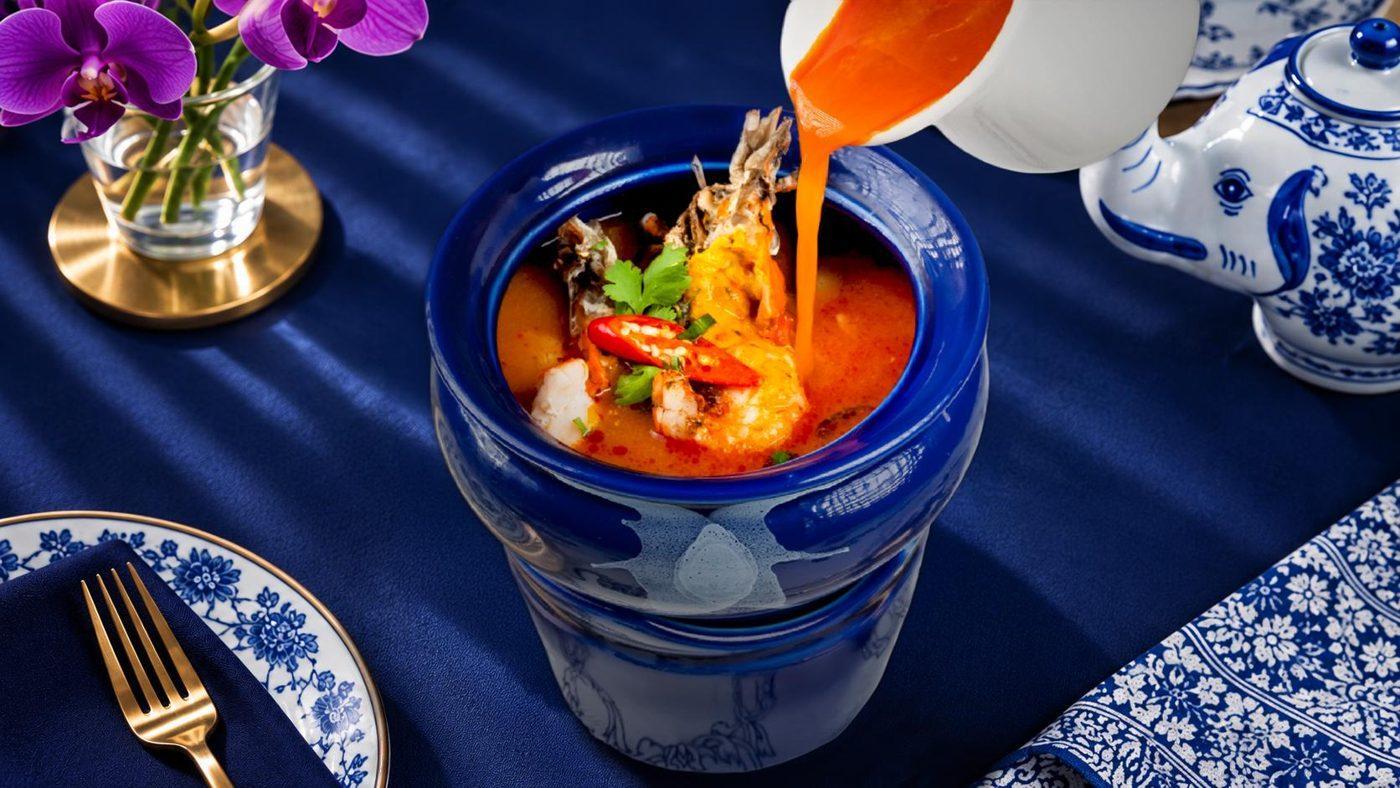
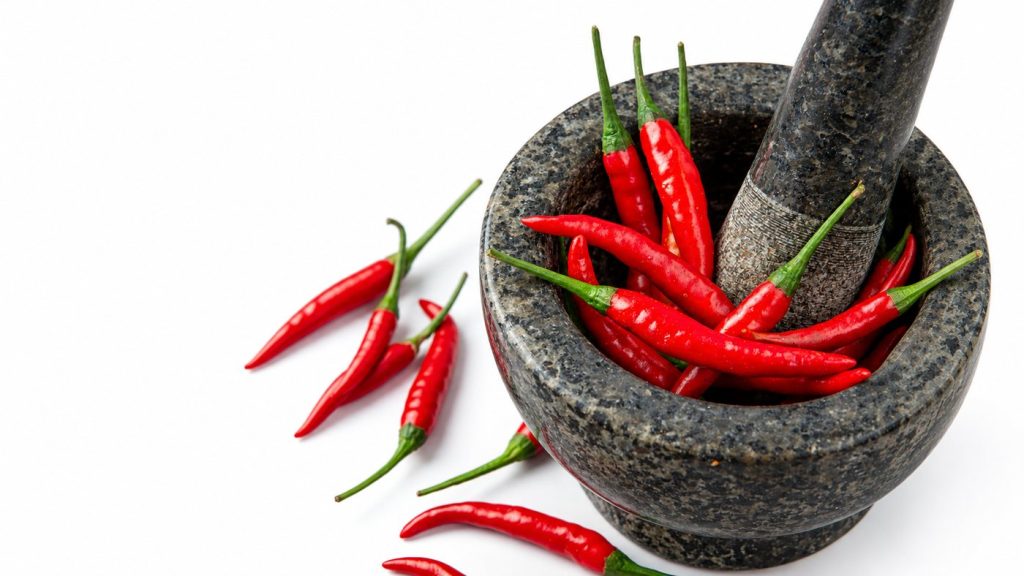
Thai food is famous for its bold flavours, and Thai chillies are a big part of that taste. But not all chillies are the same. Each variety has its own heat, aroma and flavour.
Whether you love spicy food or are trying Thai cuisine for the first time, this guide will help you understand what is on your plate and avoid an unexpected fiery surprise.
Why Are Chillies So Important in Thai Food?
Chillies appear in many classic Thai dishes, including Tom Yum, Som Tam, Thai curries, stir-fries and dipping sauces.
They do more than adding heat:
- Fresh chillies add brightness and aroma.
- Dried chillies give a deeper, more intense flavour.
The type and amount of chilli can change the whole character of a dish.
4 Popular Types of Thai Chilli
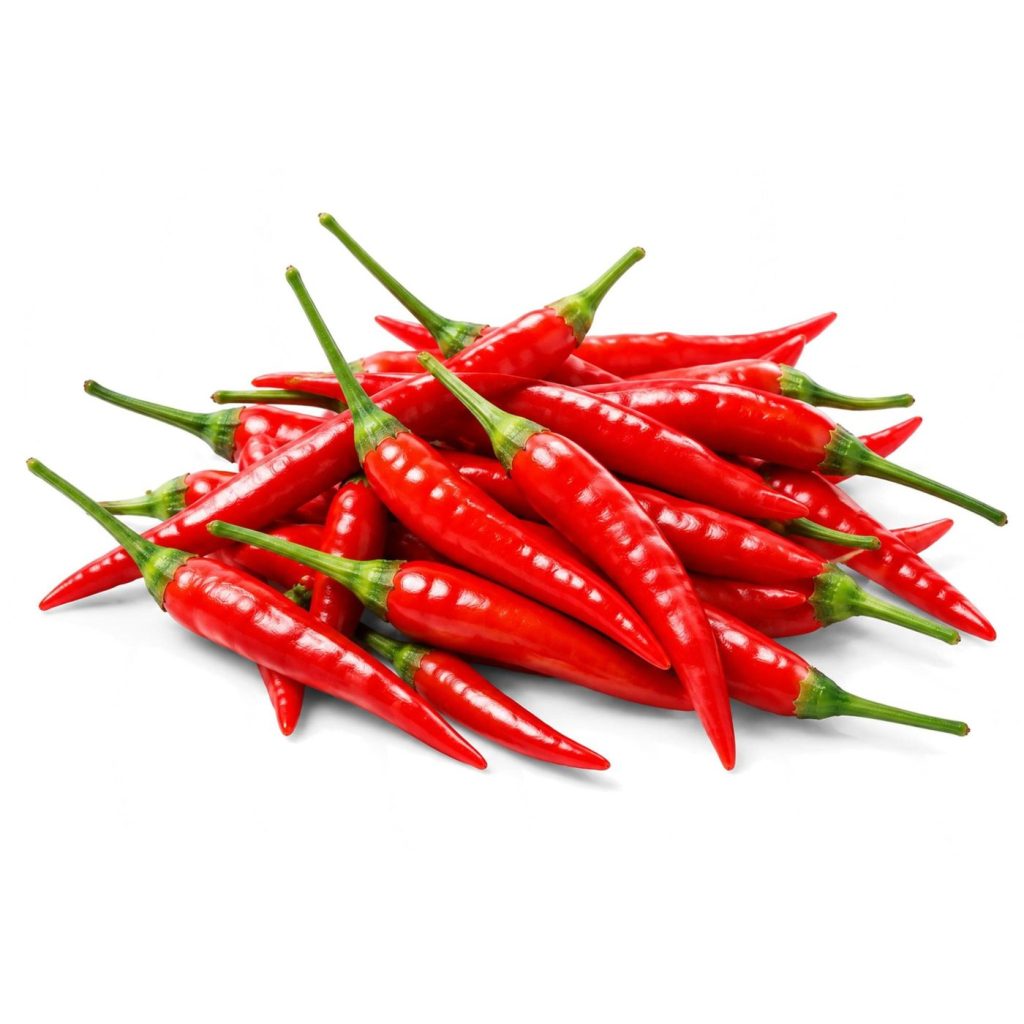
1. Prik Kee Noo (Thai Bird’s Eye Chilli)
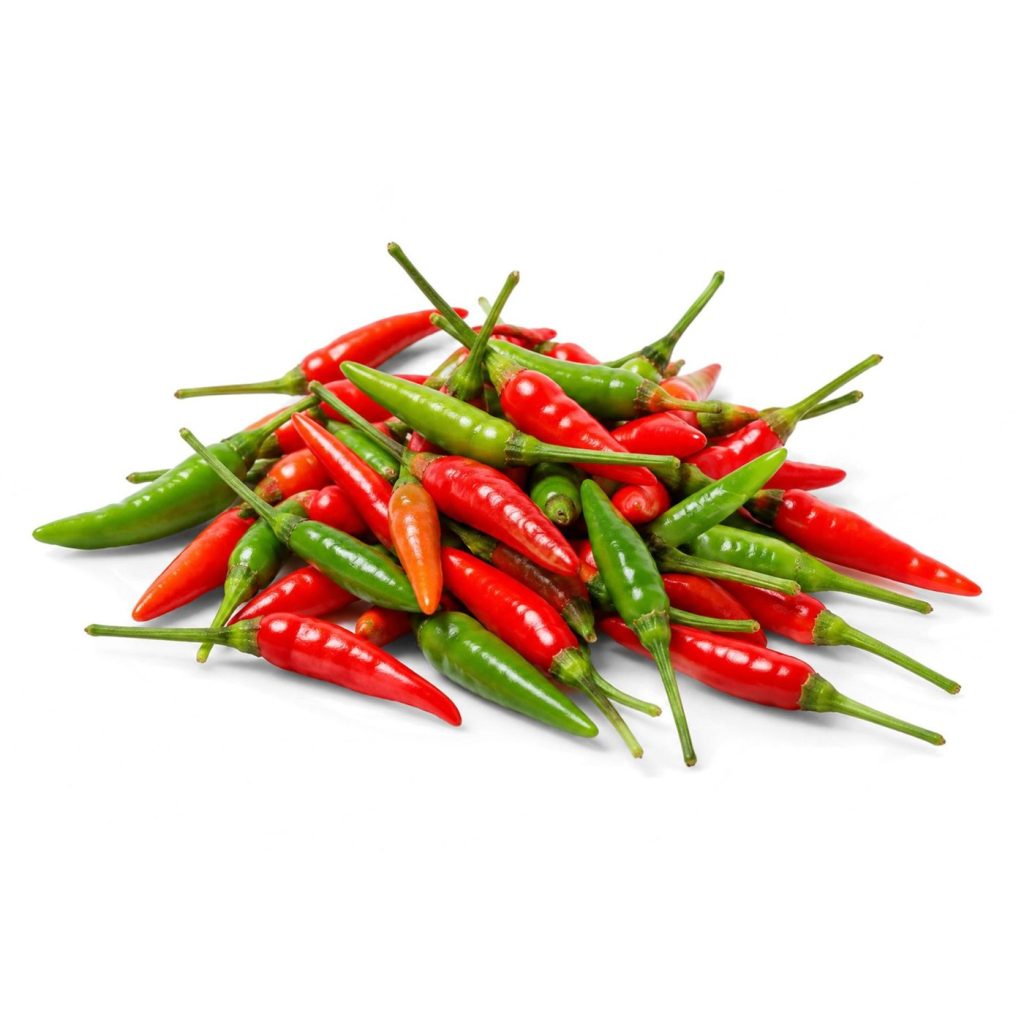
Small but extremely hot, Prik Kee Noo is one of the most common chillies in Thai cooking. It is often used fresh in Som Tam, Tom Yum and Nam Pla Prik (fish sauce with chilli).
- Heat: Very hot
- Flavour: Sharp, fresh and aromatic
2. Prik Jinda (Jinda Chilli)
Prik Jinda is a longer chilli used in Thai curries, stir-fries and spicy sauces. Red Prik Jinda also adds a bright colour to dishes.
- Heat: Hot
- Flavour: Spicy with a slightly fruity aroma
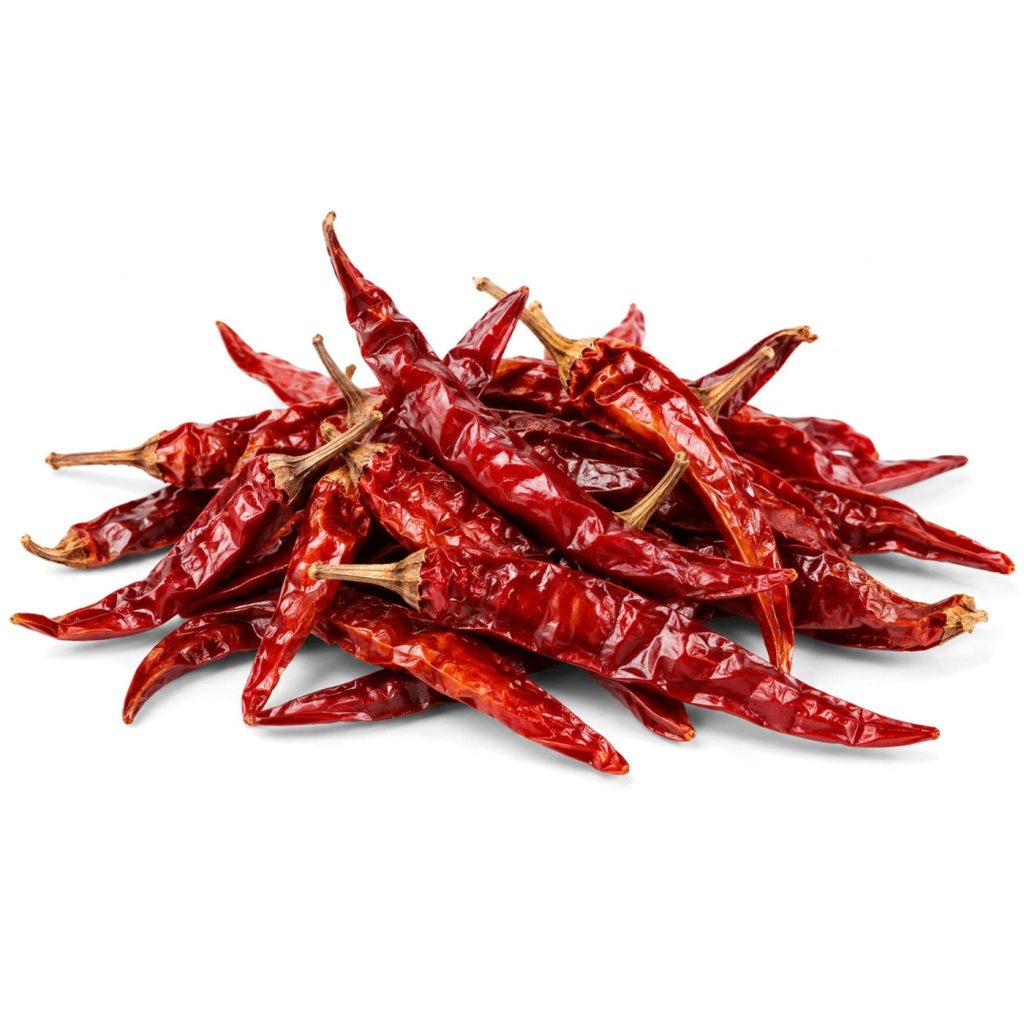
3. Dried Thai Chilli
Drying chillies creates a deeper, more concentrated flavour. Dried chillies are a key ingredient in Thai curry pastes, sauces and spicy dishes.
- Heat: Medium to very hot
- Flavour: Deep, earthy and slightly smoky
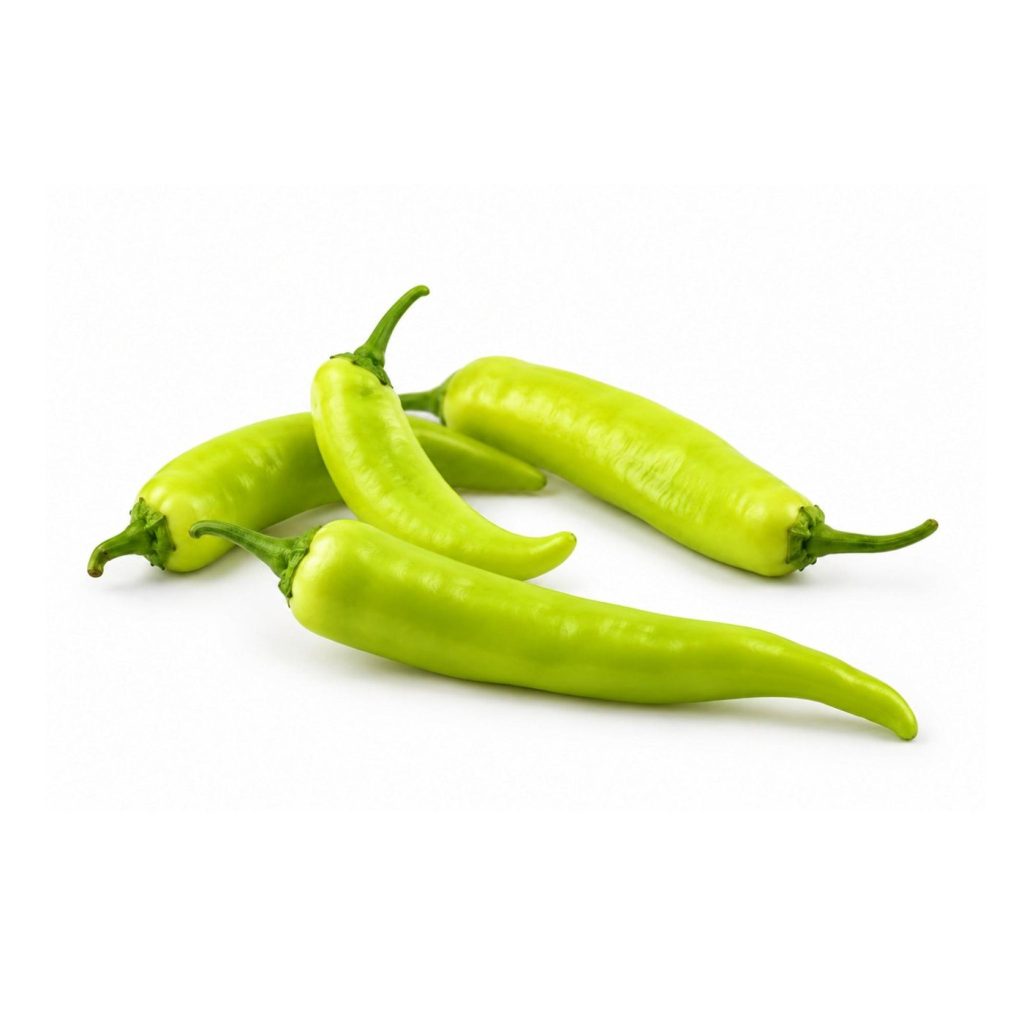
4. Prik Yuak (Thai Banana Chilli)
Prefer something milder? Prik Yuak is a good choice. These large, pale green chillies have a gentle taste and are often grilled, stir-fried or served with dips.
- Heat: Mild
- Flavour: Fresh and slightly sweet
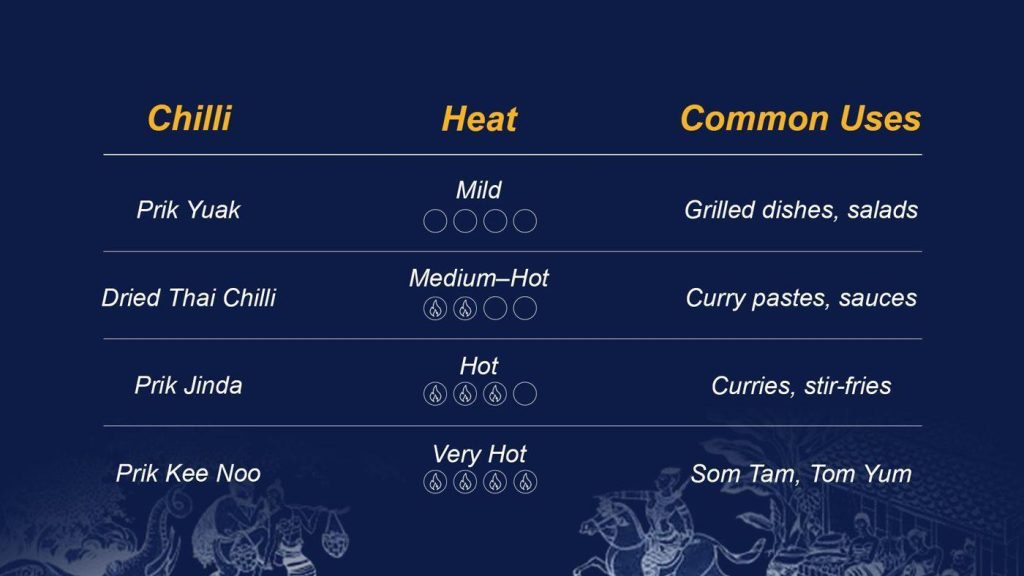
Thai Chilli Heat Levels at a Glance
Chilli heat is usually measured in Scoville Heat Units (SHU). The real heat of a chilli can still vary depending on the variety and where it was grown. Here is a simple comparison:
| Chilli | Heat level | Common uses |
|---|---|---|
| Prik Yuak | Doux | Grilled dishes, salads, dips |
| Dried Thai chilli | Medium to hot | Curry pastes, sauces |
| Prik Jinda | Chaud | Curries, stir-fries |
| Prik Kee Noo | Very hot | Som Tam, Tom Yum, Nam Pla Prik |
How to Tame the Burn of Spicy Thai Food
If your Thai food is hotter than expected, do not reach for water first. Water spreads the heat around your mouth instead of cooling it. Try these instead:
- Milk or dairy: capsaicin, the compound that makes chillies hot, mixes with fat rather than water, so milk eases the burn.
- Rice: a spoonful of plain rice makes spicy food easier to handle.
- Coconut milk: this is why rich Thai curries feel balanced, even when they are spicy.
- Something sweet: a little sweetness helps balance the feeling of heat.
How to Order Thai Food Less Spicy
Travelling in Thailand? These simple phrases make ordering easy:
| Say this | Thai | Meaning |
|---|---|---|
| Mai phet | ไม่เผ็ด | Not spicy |
| Phet nit noi | เผ็ดนิดหน่อย | A little spicy |
| Mai sai prik | ไม่ใส่พริก | No chilli |
| Phet mak | เผ็ดมาก | Very spicy |
Not used to spicy food? Start with “phet nit noi” to ask for just a little heat.
Frequently Asked Questions
A: Among common culinary varieties, Prik Kee Noo (Thai Bird’s Eye chilli)—particularly the smaller wild variant, Prik Kee Noo Suan—is considered the hottest, measuring between 50,000 and 100,000 Scoville Heat Units (SHU). It is known for its intense, immediate heat and distinct aroma, making it a staple in dishes like Tom Yum and Som Tum.
A: Prik Yuak (Thai banana pepper) is the mildest common Thai chilli, measuring practically under 1,000 Scoville Heat Units (SHU). It has thick flesh, a crisp texture, and a subtly sweet, vegetal flavor, making it ideal for mild stir-fries (Pad Prik Yuak) or stuffed with seasoned pork.
A: No, drinking water does very little because capsaicin (the compound causing chilli heat) is fat-soluble and repels water, simply spreading the oil across your palate. To effectively neutralize the burn, reach for dairy products with casein (like milk or yogurt), full-fat coconut milk, acidic citrus, or plain steamed jasmine rice to physically absorb the heat.
A: To ask for non-spicy food when ordering, say “Mai Phet” (ไม่เผ็ด). If you prefer a mild level of heat, say “Phet Nit Noi” (เผ็ดนิดหน่อย). For natural politeness, add “Khrap” (if you speak as a male) or “Kha” (if you speak as a female) at the end of the phrase (e.g., “Mai phet khrap/kha”).
More Than Just Heat
Thai chillies are not only about making food hotter. Each variety brings its own aroma, flavour and colour to Thai cuisine.
From the fiery Prik Kee Noo to the mild Prik Yuak, once you understand the differences you can enjoy Thai food more and order with confidence, knowing chilli is part of the balance that makes Thai food so special.