
For nine days each autumn, something changes on Thailand’s streets. Yellow flags appear above food stalls, shrine courtyards fill with people dressed in white, and the smell of grilled pork gives way to tofu, mushrooms and fresh vegetables. This is Tesagan Gin Je, Thailand’s Vegetarian Festival, and it is one of the most distinctive times of year to eat your way through the country.
In 2026, the festival falls from around 10 – 18 October, with ceremonies in some places starting the evening before. Phuket hosts the best-known celebrations, but you will see the yellow flags in Bangkok’s Chinatown, in Trang, and in towns right across Thailand.
What is the festival about?
Tesagan Gin Je is held during the ninth month of the Chinese lunar calendar and honours the Nine Emperor Gods. It came to Thailand with Chinese communities and, over generations, became part of the country’s shared heritage, especially among Thai-Chinese families.
For those who take part, the nine days are about cleansing the body and mind. People give up meat and other animal products, make merit, visit shrines and try to keep their thoughts and actions pure. For everyone else, it is a chance to see a side of Thai culture that most visitors never meet, and to taste a whole cuisine built around the festival’s rules.
How the festival is celebrated
Dressing in white
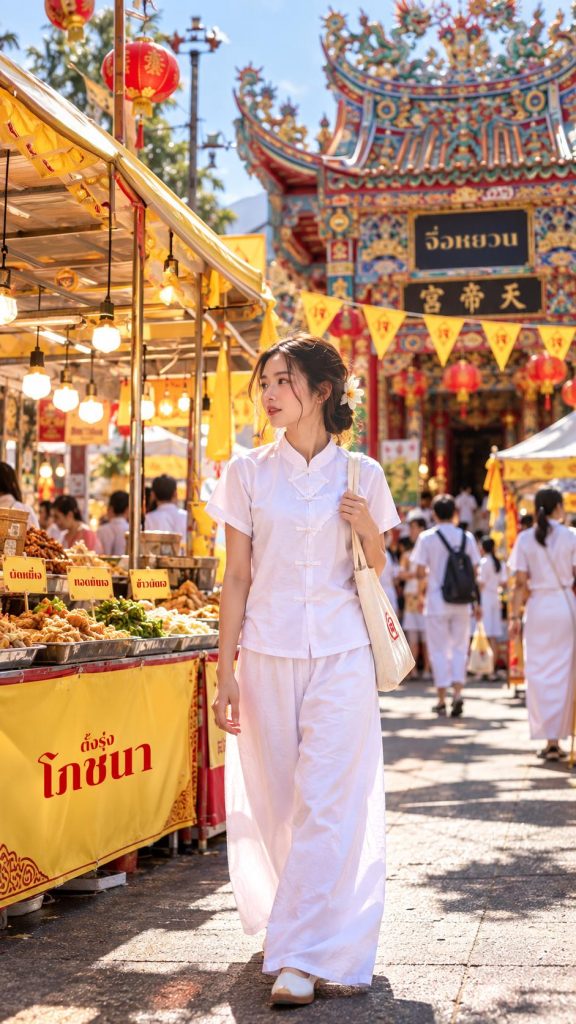
Many participants wear white throughout the festival as a sign of purity and respect. In Phuket and other festival towns, you will see whole crowds dressed this way at shrines and along procession routes.
Visiting the shrines
Chinese shrines, known locally as aam, become the centre of community life. People come to pray, light incense, leave offerings and take part in ceremonies that run from morning into the night.
Processions
Colourful street processions wind through many communities during the festival. Phuket’s are the most famous, with drums, firecrackers and dramatic rituals that draw visitors from around the world.
What does the yellow flag mean?
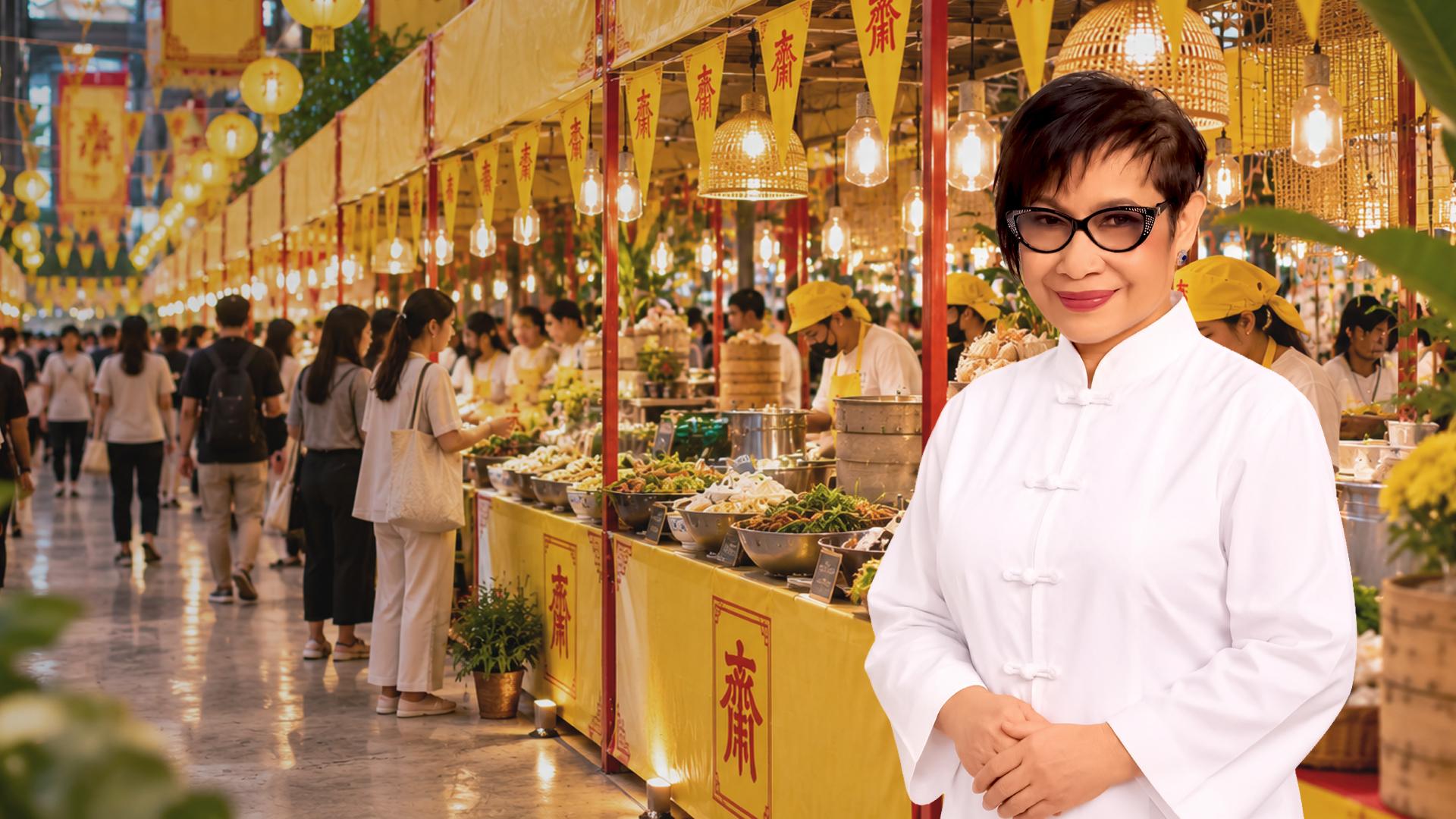
The easiest way to spot the festival is to look up. Restaurants, market stalls and shops serving festival food hang yellow flags printed with red lettering that reads เจ (jay). The sign tells passers-by that the food inside follows the festival’s rules, so anyone keeping the diet can eat there with confidence.
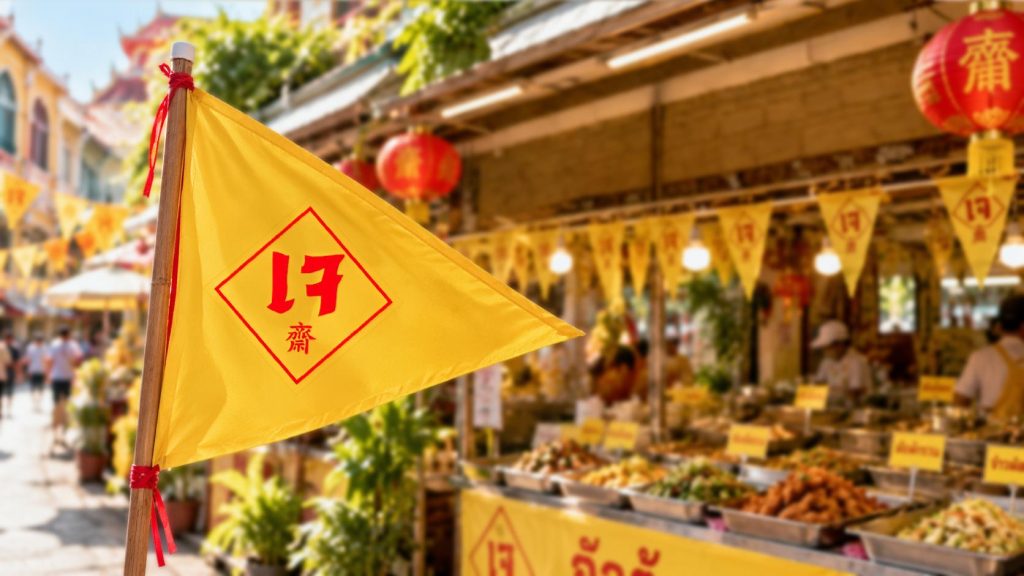
For visitors, the yellow flag has become one of the festival’s most recognisable symbols, and following them is a good way to find some of the most interesting food of the year.
Jay food rules: what’s in and what’s out
Jay food is often described simply as vegetarian food, but the rules go further than that.
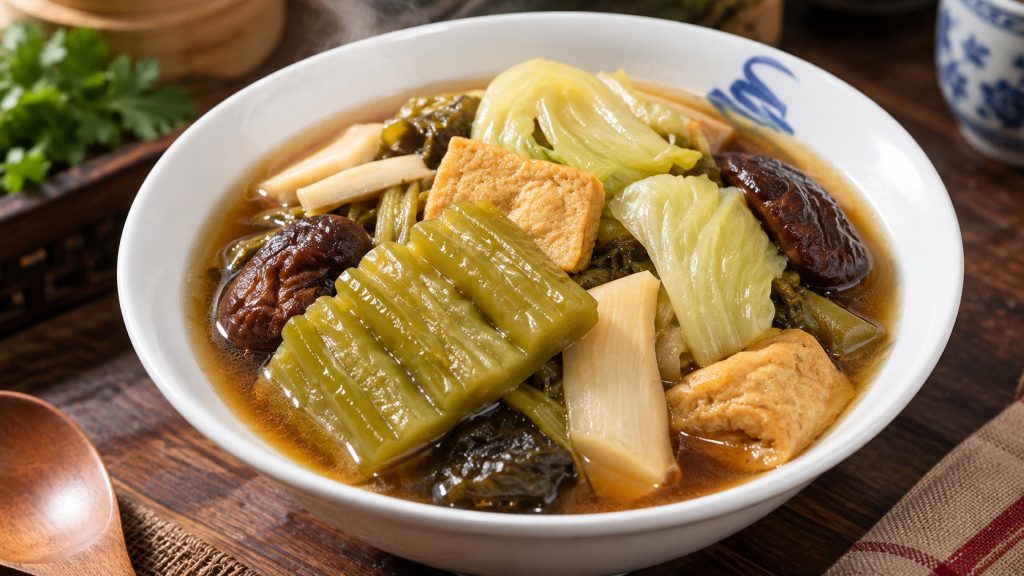
What you can eat
- Vegetables and fruit
- Tofu and other soy products
- Mushrooms
- Beans and legumes
- Rice and grains
- Plant-based proteins
What you avoid
- Meat and poultry
- Fish and seafood
- Eggs
- Milk and dairy products
- Alcohol
- Garlic, onions, chives and other pungent vegetables
That last point is what sets Jay food apart. Traditionally, strong-smelling vegetables such as garlic and onion are believed to stir up the body and disturb the calm the festival aims for, so they are left out entirely. A dish can be fully vegan and still not count as Jay if it contains them.
Sauces are the other thing to watch. Fish sauce, oyster sauce and shrimp paste sit at the heart of many Thai dishes, so if you are keeping to the diet, ask about seasonings or stick to places flying the yellow flag.
Jay dishes worth trying
Keeping to the rules doesn’t mean giving up the flavours of Thai food. Cooks swap meat for tofu, mushrooms and plant-based proteins, and rebuild the depth that garlic and fish sauce usually provided with soy, herbs and slow cooking. Look out for:
- Pad Thai Jay, the classic stir-fried noodles made with tofu and a seasoning free of fish sauce and egg
- Pad Kra Pao Jay, spicy holy basil stir-fry made with plant-based mince or mushrooms
- Green Curry Jay, made with a Jay-friendly curry paste, coconut milk, vegetables and tofu
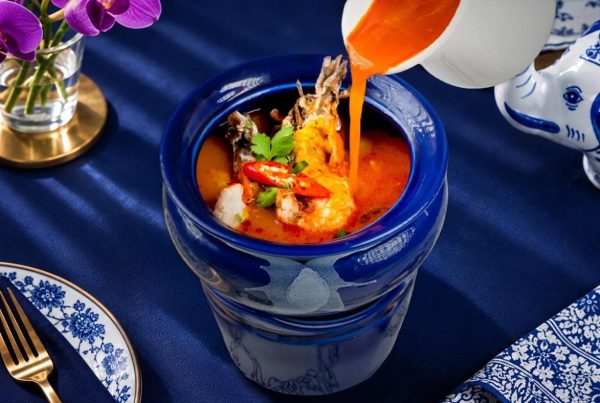
- Tom Yum Jay, the hot and sour soup, with mushrooms taking the place of prawns
- Tofu and mushroom dishes of every kind, from braises to crispy fritters sold by the bag at market stalls
Vegetarian Thai food at Blue Elephant
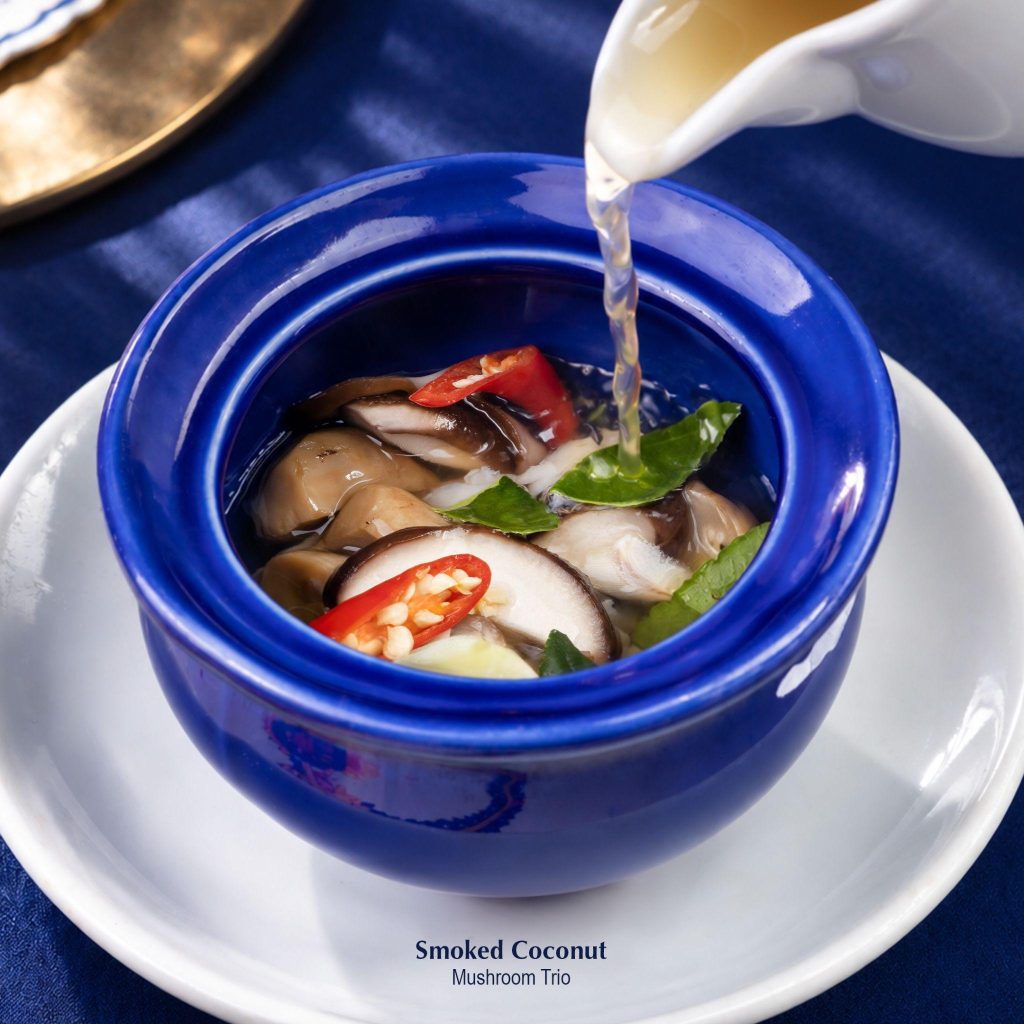
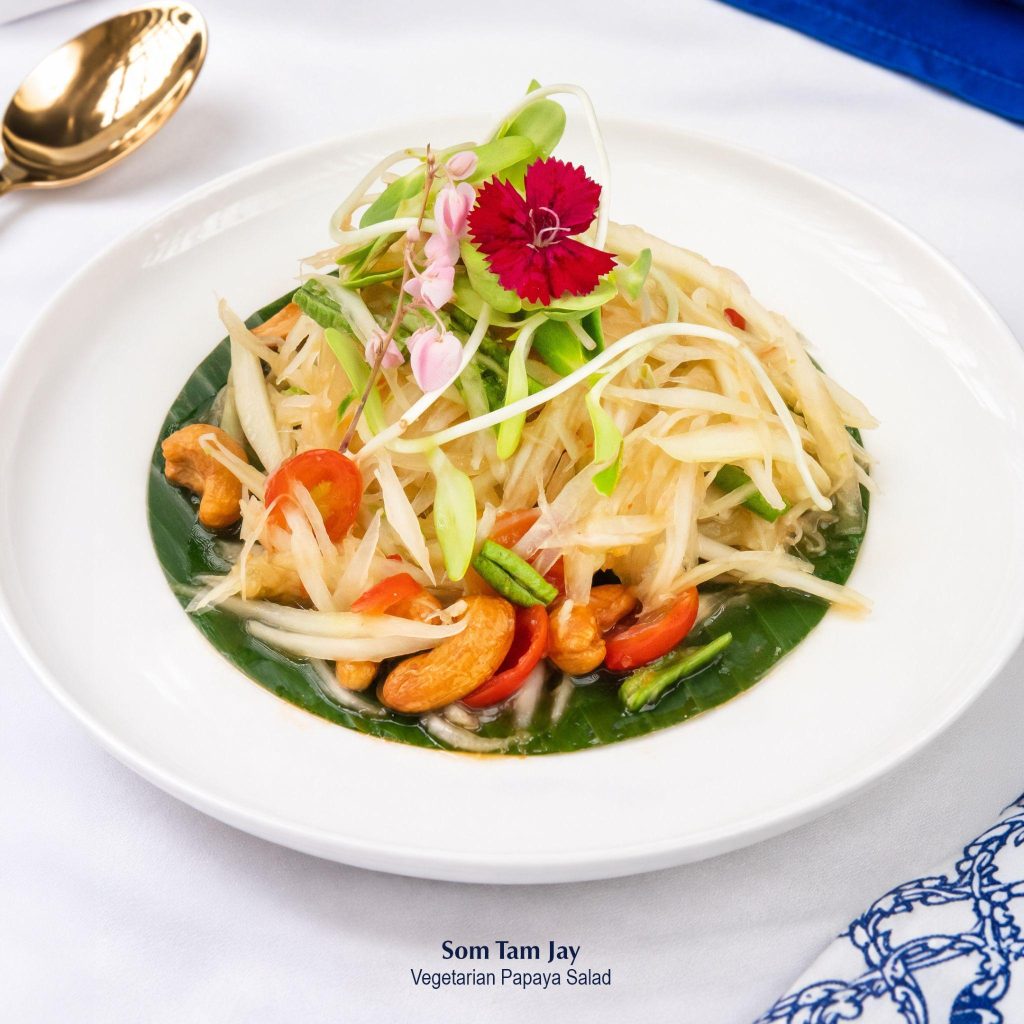
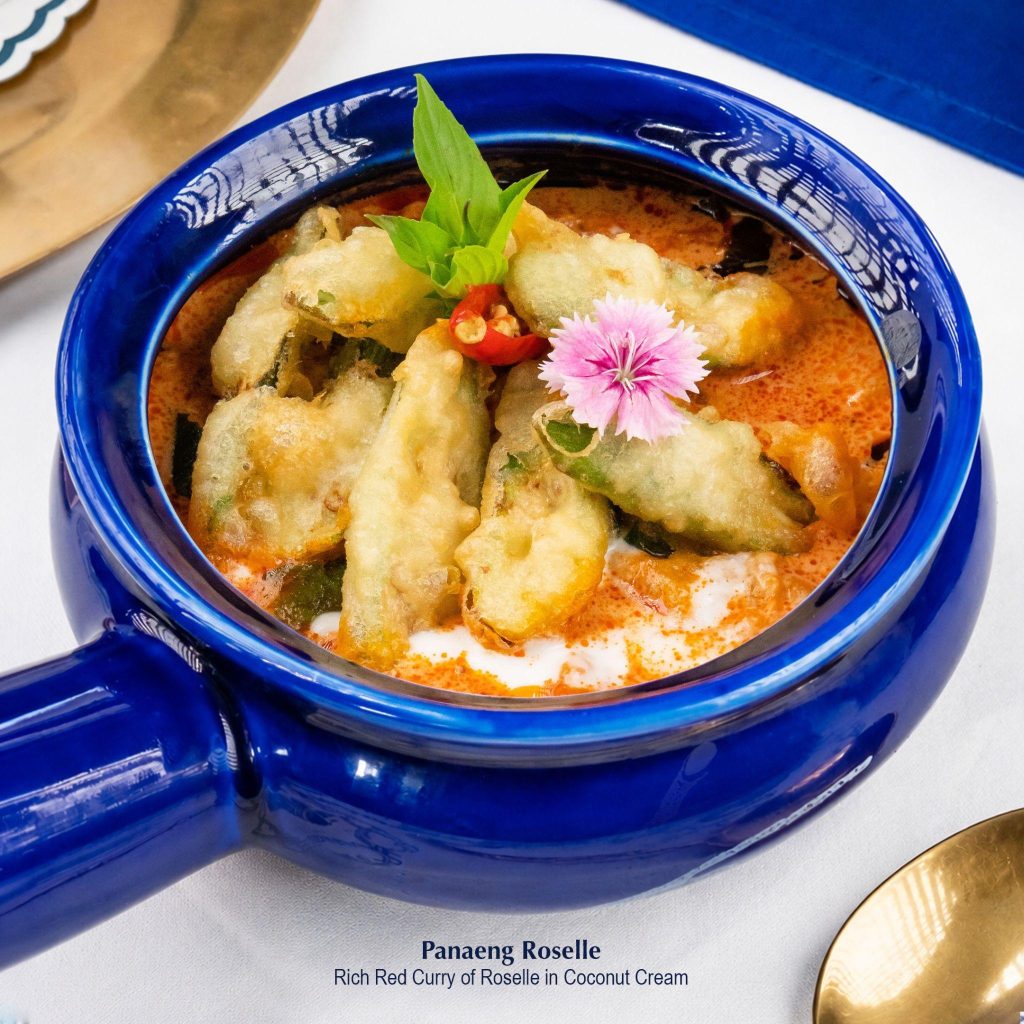
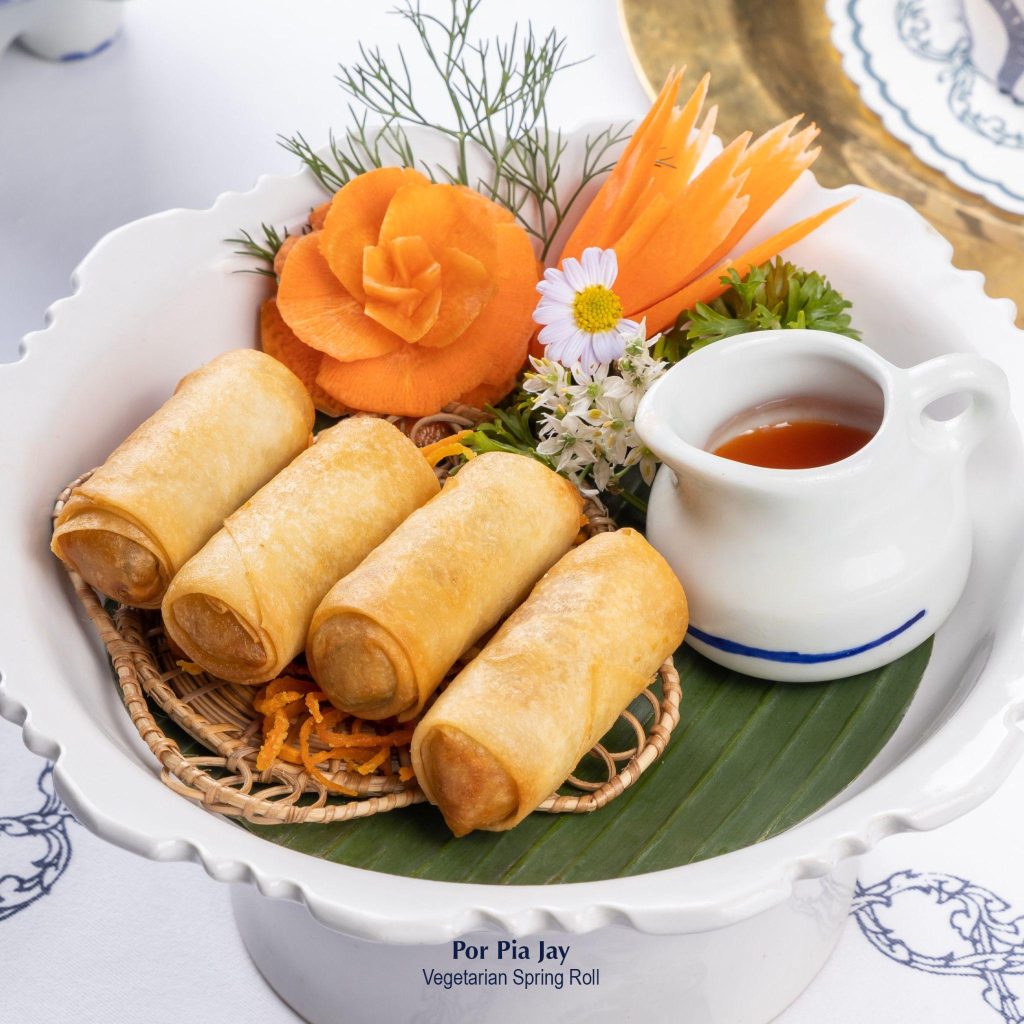
The Vegetarian Festival is a reminder of how naturally Thai cooking adapts to plant-based ingredients. At Blue Elephant, that idea runs all year: our restaurants offer a vegetarian menu built on the same approach to heritage Thai cuisine that guides everything we cook, with fresh vegetables, herbs and aromatics carrying the flavour.
One thing to know before you visit: our vegetarian dishes are not prepared as Jay food. Some use garlic, onion or other ingredients that the festival diet excludes, so if you are strictly keeping the Jay rules, please ask our team about each dish. If you simply want to enjoy meat-free Thai food during the festival season, or at any time of year, our vegetarian menu is a good place to start.
If you are in Phuket for the festival, our restaurant in Phuket Old Town sits among the Sino-Portuguese streets where many of the celebrations take place, which makes it an easy stop between shrine visits and processions. In Bangkok, our restaurant is a short trip from Chinatown, where the yellow flags line Yaowarat Road throughout the festival.
Experiencing the festival for yourself
Thailand’s Vegetarian Festival is about far more than a change of diet. It brings faith, community and Thai-Chinese heritage together in a tradition passed down through generations, and food sits right at its heart.
Whether you are heading to Phuket, wandering through Bangkok’s Chinatown or simply curious about Jay food, keep an eye out for the yellow flag and the เจ sign. And when you are ready to sit down to vegetarian Thai cooking in a relaxed setting, you will find a table waiting at Blue Elephant.